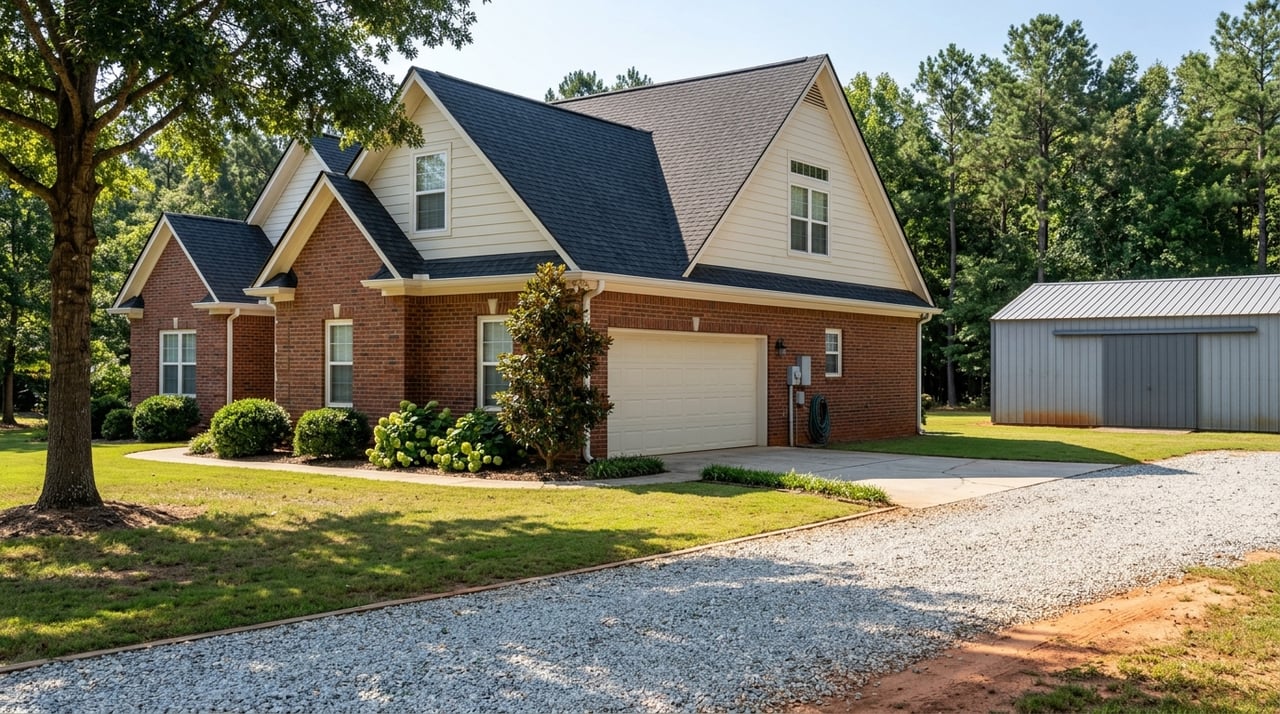
Dreaming about a few acres, a garden, maybe a barn, and enough room to spread out around Monroe? That kind of property can be a great fit for your lifestyle, but buying land or a mini-farm is very different from buying a typical house in a subdivision. Before you make an offer, you need to know what the parcel actually allows, what it will take to build, and whether utilities, septic, and access work for your plans. Let’s dive in.
Start With Jurisdiction and Zoning
One of the biggest mistakes land buyers make is assuming that acreage automatically means farm-friendly use. Around Monroe, that is not how it works. The parcel’s exact jurisdiction and zoning district control what can be built and how the land can be used.
Within the City of Monroe, the city uses a mix of character-based and traditional zoning, and the current ordinance was adopted on December 10, 2024. The city directs buyers to its zoning ordinance, maps, and GIS resources to confirm how a specific property is classified.
In Walton County, buyers should not rely on a listing calling something a “mini-farm.” The county notes that parcel-specific zoning should be verified through its zoning page and QPublic lookup tools, because the actual district matters more than the acreage label.
Walton County districts to know
For many acreage buyers, the most relevant Walton County districts are Agricultural (A), Rural Estate A1, and Rural Estate A2. According to the county’s land development ordinance, these districts have different lot-size and development rules.
- Agricultural (A): intended for active farm operations and requires a 5-acre minimum lot area
- Rural Estate A1: generally requires 2 acres, or 1 acre when public or community water and sewer are available
- Rural Estate A2: allows 1.5 acres with water and septic, 2 acres with a private well and septic, and 3/4 acre with public or community water and sewer
A1 and A2 also include standards for setbacks, house size, roof pitch, and impervious surface limits. That means the land may support a home, but not always in the way a buyer first imagines.
Know What “Mini-Farm” Really Means
“Mini-farm” is a lifestyle term, not a legal category. If you want animals, a garden, pasture, or outbuildings, you need to compare your goals with the parcel’s zoning rules before moving forward.
In Walton County, the Agricultural district is the clearest fit for true farm use because it explicitly includes soil crops, livestock, fish, fowl, and commercial timber. The same county ordinance also says animal quarters must be at least 50 feet from property lines.
The county also limits large hoofed livestock based on fenced acreage. Outside the Agricultural district, the limit is 2 animals per fenced acre, while inside Agricultural it is 5 animals per fenced acre. The ordinance also prohibits free-range animals or poultry within platted subdivisions.
Monroe city limits work differently
Inside Monroe city limits, agricultural uses are handled as compatible or accessory uses in certain residential districts rather than as a separate rural farm category. Under the city’s zoning ordinance, horses and stables are allowed only as accessory uses in certain districts, limited to 1 horse per fenced acre on the same lot, with a maximum of 4 horses per lot.
The city also allows noncommercial cows, sheep, goats, and chickens only on lots of at least 2 acres, with density caps. In plain terms, if you want horses or poultry, county acreage parcels may offer more flexibility than an in-town Monroe lot, depending on the exact parcel review.
Check Utilities Before You Close
Utility service is another area where buyers can make risky assumptions. A Monroe mailing address does not automatically mean city utility service, and service availability can change from one parcel to the next.
The City of Monroe Utility Department provides electric, water, wastewater, natural gas, cable TV, broadband internet, and VoIP phone service within its system. You can review those services on the city’s utility department page.
Walton EMC serves Walton County broadly, but it also notes that service is unavailable in some parts of Monroe’s city limits. That is why it is smart to verify electric, water, sewer, gas, and internet service for the exact parcel, not just the address shown in a listing.
Utility questions worth asking early
Before you go under contract, try to confirm:
- Whether the parcel is served by city water or will need a well
- Whether sewer is available or septic will be required
- Which electric provider serves the property
- Whether internet options fit your day-to-day needs
- Whether utility easements affect where you can build
Septic Feasibility Can Make or Break the Deal
If the property will need septic, do not treat that as a last-minute item. Septic feasibility should be one of your earliest due-diligence steps.
Walton County Environmental Health in Monroe handles septic tank permits, repair permits, existing system evaluations, site evaluations, and subdivision plan reviews. The local health district also confirms that its environmental health team permits and inspects on-site septic systems and conducts private well water sampling through its environmental health services page.
The county’s site evaluation form shows just how detailed this process can be. Buyers should gather a lot sketch, building location, road name, well location if applicable, driveway and paved areas, underground utilities, drainfield location, and any easement or floodplain information.
Why soil matters so much
The same site-evaluation form makes an important point: the applicant or owner is responsible for adverse soil conditions such as rock or water tables. In other words, a parcel may look perfect on the surface but still create challenges for septic placement.
Georgia’s onsite sewage program says Level III soil classifiers are the professionals who perform soil reports, and the state manual is the technical reference for siting and permitting residential septic systems. That is useful information if a property needs deeper review.
It is also important not to confuse septic soil work with a UGA soil test. A UGA soil test helps with fertility and pH for gardens, lawns, pastures, and other plantings, but it does not replace a septic site evaluation.
Access, Permits, and Buildability Matter
A parcel can have the right size and zoning but still come with buildability hurdles. That is why access and permit requirements deserve a close look before closing.
Walton County’s residential building application packet requires a recorded warranty deed and plat. It also requires septic final approval, and if the home will use public water, a water-meter receipt.
If the lot fronts a state highway, a DOT driveway permit or final approval may also be needed. The packet also makes clear that setback compliance is the builder’s responsibility, so you will want a realistic understanding of where the house, driveway, septic area, and any future outbuildings can actually go.
Watch for easements and overlays
If a tract sits near a creek, drainage area, or low-lying section, look closely at floodplain and watershed conditions. Walton County uses overlay districts for those conditions under its land development ordinance, which can affect how the property is used and improved.
This is one more reason not to judge a land purchase by photos alone. Beautiful open ground can still come with practical limits.
A Smart Due-Diligence Plan
When you are buying land or a mini-farm around Monroe, your goal is simple: make sure the property matches your plans before you are committed. A careful review up front can save you time, money, and stress later.
Here is a practical checklist based on Walton County and Monroe guidance:
- Confirm the exact jurisdiction and zoning using the city or county mapping tools
- Review the recorded deed, plat, and any restrictions or easements tied to the parcel
- Verify utility availability parcel by parcel
- Schedule a septic site evaluation early if sewer is not available
- Check driveway permit requirements if the property fronts a state highway
- Compare animal plans with the parcel’s zoning and acreage limits
- Review floodplain, watershed, and other overlay concerns
- Use UGA soil testing after purchase for pasture, garden, or planting plans
Why Local Guidance Helps
Buying acreage is rarely as simple as picking your favorite piece of land and heading to closing. Zoning, septic, utility service, animal limits, and access all need to line up with how you want to use the property.
That is where practical local guidance matters. When you work with someone who understands rural and semi-rural transactions, you can ask better questions early, avoid preventable surprises, and move forward with more confidence.
If you are thinking about buying land or a mini-farm around Monroe, Lorraine Krieger can help you sort through the details and focus on properties that fit your goals.
FAQs
What should you check first before buying land around Monroe?
- Start by confirming the parcel’s exact jurisdiction and zoning through Monroe or Walton County mapping tools, because zoning controls how the land can be used.
What zoning districts matter most for mini-farm buyers in Walton County?
- The most relevant districts are Agricultural (A), Rural Estate A1, and Rural Estate A2, and each has different lot-size and use standards.
Can you keep horses or chickens on land in Monroe, GA?
- It depends on whether the property is in Monroe city limits or unincorporated Walton County, along with the parcel’s zoning, acreage, and any subdivision restrictions.
Does a Monroe mailing address mean city utilities are available?
- No. Utility availability should be verified for the exact parcel, because city service areas and electric coverage do not always match a mailing address.
Why is a septic site evaluation important for Walton County land?
- A septic site evaluation helps determine whether the lot can support an on-site septic system and identifies issues such as soil, rock, water tables, easements, and drainfield placement.
Is a UGA soil test the same as septic testing for land in Walton County?
- No. A UGA soil test is for fertility and pH for planting, while septic feasibility requires a separate environmental health review.